
pulsaf5.com · all systems nominal
How does professional pcb assembly ensure zero-defect manufacturing?
In the pursuit of zero-defect manufacturing, the professional PCB Assembly process first relies on high-precision automated detection technology. The automatic optical inspection system can scan circuit boards at a speed of over 10 times per second, capturing offsets as small as 01005 specification components. Its detection accuracy reaches ±25 microns, reducing the missed detection rate of manual visual inspection from 5% to below 0.1%. For instance, when manufacturing control boards for medical equipment manufacturers, the introduction of 3D AOI has kept the volume deviation of solder paste printing within ±5%, reducing the short-circuit and false solder defect rate from 500 parts per million to less than 10 parts per million, and increasing the product pass rate to 99.99%.
Strict process control is the cornerstone of the zero-defect goal. During the reflow soldering process, the temperature curve is monitored in real time, with the peak temperature controlled between 235°C and 245°C, and the heating rate not exceeding 3°C per second, ensuring that the lead-free solder joint strength exceeds 50 megapascals. Statistical process control data show that by keeping the variance of the furnace temperature curve within ±2°C, the cold welding probability of BGA components has decreased from 1.2% to 0.05%. Apple requires PCB Assembly suppliers to perform more than 200 process parameter checks in the manufacturing of iPhone motherboards, resulting in a failure interval of more than 100,000 hours for its motherboards under the 85°C high-temperature test.
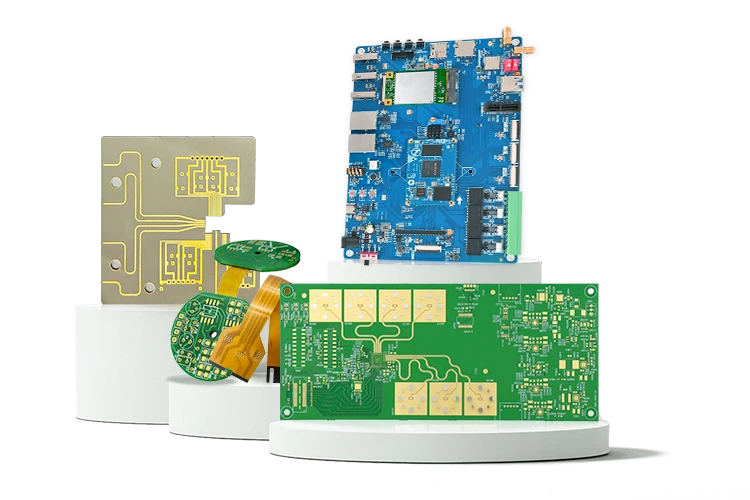 The pre-quality verification of supply chain components is equally crucial. Professional PCB Assembly service providers will conduct 100% electrical performance tests on incoming components and sample them for high-temperature aging at 150°C for 48 hours to control the early failure rate within 1%. Take automotive electronics as an example. Suppliers that follow the IATF 16949 standard conduct X-ray inspections on each batch of ics, with an internal crack defect detection rate as high as 99.9%. This has prevented a large-scale recall incident like that of a certain brand of car in 2015 due to the early failure of the capacitor on the ECU board, directly recovering potential losses of over 200 million US dollars.
Zero-defect manufacturing also relies on a closed-loop data system. Modern SMT production lines collect over 50 parameters in real time, such as placement pressure and solder paste thickness, and predict defect probabilities through machine learning models, raising the process capability index (Cpk) from 1.0 to over 1.67. A report from a certain communication equipment enterprise shows that by integrating the intelligent PCB Assembly platform, it has shortened the response time for process deviations from 4 hours to 10 minutes, reduced the standard deviation of defect rates by 60%, and saved approximately 3 million yuan in quality costs annually. This data-driven dynamic optimization is like installing a high-precision navigation system for the manufacturing process, continuously pushing product quality to the Six Sigma level.
The pre-quality verification of supply chain components is equally crucial. Professional PCB Assembly service providers will conduct 100% electrical performance tests on incoming components and sample them for high-temperature aging at 150°C for 48 hours to control the early failure rate within 1%. Take automotive electronics as an example. Suppliers that follow the IATF 16949 standard conduct X-ray inspections on each batch of ics, with an internal crack defect detection rate as high as 99.9%. This has prevented a large-scale recall incident like that of a certain brand of car in 2015 due to the early failure of the capacitor on the ECU board, directly recovering potential losses of over 200 million US dollars.
Zero-defect manufacturing also relies on a closed-loop data system. Modern SMT production lines collect over 50 parameters in real time, such as placement pressure and solder paste thickness, and predict defect probabilities through machine learning models, raising the process capability index (Cpk) from 1.0 to over 1.67. A report from a certain communication equipment enterprise shows that by integrating the intelligent PCB Assembly platform, it has shortened the response time for process deviations from 4 hours to 10 minutes, reduced the standard deviation of defect rates by 60%, and saved approximately 3 million yuan in quality costs annually. This data-driven dynamic optimization is like installing a high-precision navigation system for the manufacturing process, continuously pushing product quality to the Six Sigma level.
The pre-quality verification of supply chain components is equally crucial. Professional PCB Assembly service providers will conduct 100% electrical performance tests on incoming components and sample them for high-temperature aging at 150°C for 48 hours to control the early failure rate within 1%. Take automotive electronics as an example. Suppliers that follow the IATF 16949 standard conduct X-ray inspections on each batch of ics, with an internal crack defect detection rate as high as 99.9%. This has prevented a large-scale recall incident like that of a certain brand of car in 2015 due to the early failure of the capacitor on the ECU board, directly recovering potential losses of over 200 million US dollars.
Zero-defect manufacturing also relies on a closed-loop data system. Modern SMT production lines collect over 50 parameters in real time, such as placement pressure and solder paste thickness, and predict defect probabilities through machine learning models, raising the process capability index (Cpk) from 1.0 to over 1.67. A report from a certain communication equipment enterprise shows that by integrating the intelligent PCB Assembly platform, it has shortened the response time for process deviations from 4 hours to 10 minutes, reduced the standard deviation of defect rates by 60%, and saved approximately 3 million yuan in quality costs annually. This data-driven dynamic optimization is like installing a high-precision navigation system for the manufacturing process, continuously pushing product quality to the Six Sigma level.Ready to see the signal behind the numbers?
Pulsaf5 turns fragmented transaction, identity, and behavioral data into one real-time performance signal — shipped in days, not quarters.